
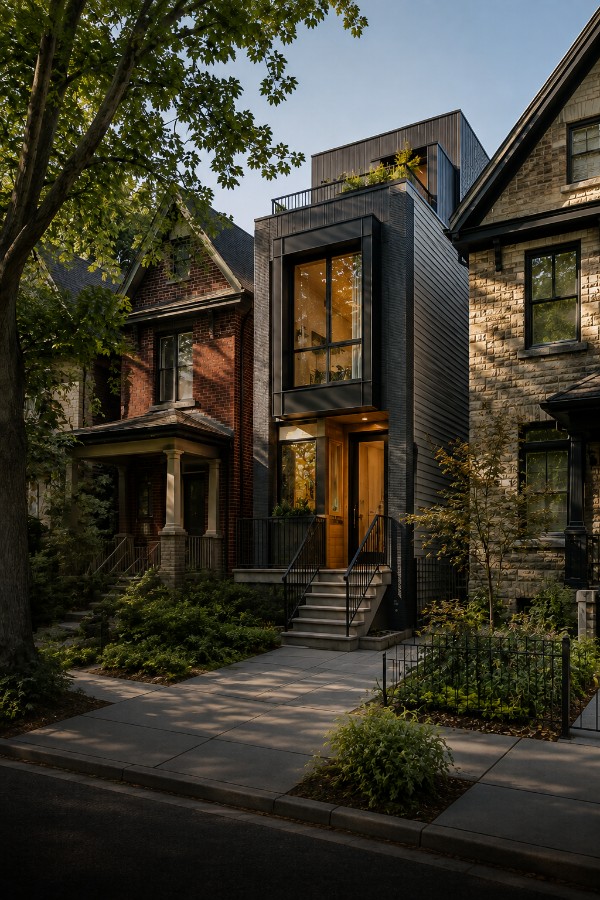
07 Aug What Is Infill Development?
Thoughtful development that makes better use of the neighborhoods we already have.
Infill development is the creation of new housing on vacant, underutilized, or overlooked property within an existing community.
Rather than extending development farther outward, infill looks inward—identifying opportunities to thoughtfully add new homes where streets, utilities, transportation, businesses, schools, and other community infrastructure may already exist.
At HAUS 121, we view infill development as more than simply building on an empty lot. It is an opportunity to create housing that complements its surroundings, responds to community needs, and contributes lasting value to the neighborhood.
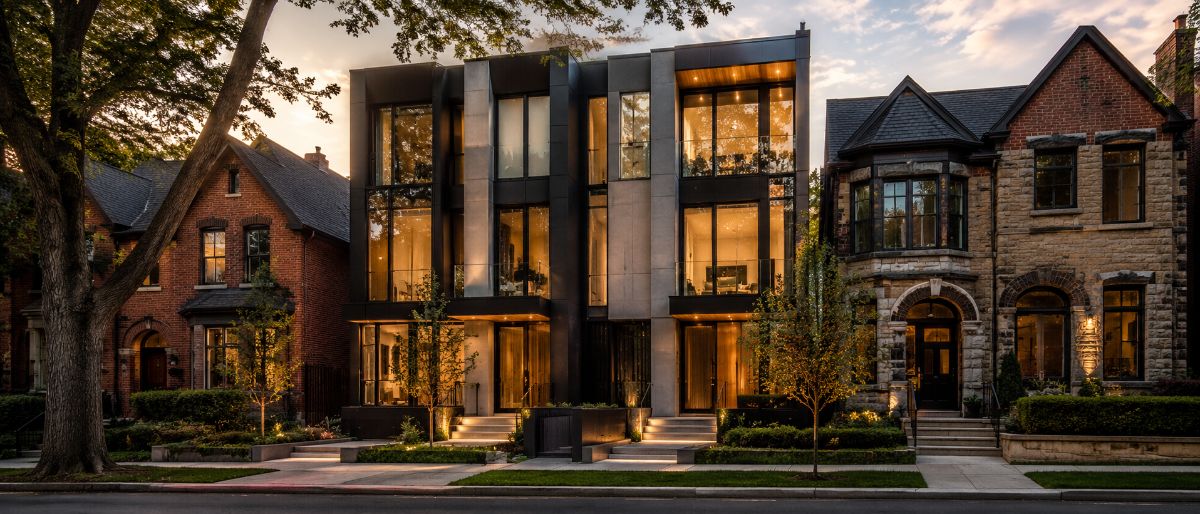
What Is Considered Infill Development?
Infill development generally occurs within an established neighborhood or developed area.
An infill opportunity may include:
- A vacant residential lot between existing homes
- An oversized parcel that may support additional housing
- Underutilized land within an established community
- Property where an obsolete or deteriorated structure can be replaced
- A site that may support a duplex, townhome, small multifamily property, or other missing-middle housing
- Several adjacent parcels that can be assembled for thoughtful residential development
Every property is different. Zoning, lot dimensions, utility access, site conditions, density requirements, parking, setbacks, and local regulations can all affect what may be possible.
Why Does Infill Development Matter?
Many established communities already have the infrastructure and neighborhood amenities that make them desirable places to live.
At the same time, they may contain vacant lots, aging properties, or parcels that are not being used to their full potential.
Thoughtful infill development can help address both issues.
It can create new housing opportunities while making productive use of land that already exists within the community.
Depending on the property and local regulations, infill development may also:
- Add new homes without requiring large-scale suburban expansion
- Expand housing choices within established neighborhoods
- Return vacant or underutilized property to productive use
- Support neighborhood investment and revitalization
- Introduce attainable or missing-middle housing options
- Increase the efficient use of existing infrastructure
- Strengthen the residential character of a community
The goal should not simply be to build more. The goal should be to build appropriately.
What Types of Housing Can Be Created Through Infill Development?
The appropriate type of housing depends on the site, surrounding neighborhood, zoning regulations, market demand, and overall development strategy.
Potential infill projects may include:
Single-Family Homes
A vacant residential lot may provide an opportunity to construct a new home that complements the scale and character of the surrounding neighborhood.
Duplexes and Two-Family Housing
Where zoning permits, duplexes can introduce additional housing while maintaining a residential scale similar to surrounding homes.
Townhomes
Multiple adjoining parcels or appropriately sized sites may support townhomes that provide greater density without requiring a large apartment development.
Missing-Middle Housing
Small-scale multifamily housing—including duplexes, triplexes, fourplexes, courtyard housing, and similar residential formats—can provide alternatives between detached single-family homes and larger apartment buildings.
Small Multifamily Development
Certain properties may support compact multifamily development where zoning, infrastructure, neighborhood context, and market conditions make it appropriate.
The right project begins with the site—not with a predetermined building type.
How Does HAUS 121 Evaluate an Infill Opportunity?
Before thinking about finishes, floor plans, or construction, we first look at whether the development concept makes sense.
Our evaluation begins with the property itself.
01 — Understand the Site
We review the location, lot dimensions, existing conditions, surrounding properties, access, and other characteristics that may affect development.
02 — Understand What May Be Allowed
Zoning, setbacks, height restrictions, density, lot coverage, parking, historic requirements, utilities, and other local regulations can significantly influence development potential.
When necessary, appropriate architects, engineers, land-use professionals, surveyors, and other specialists may be engaged to evaluate project requirements.
03 — Define the Development Concept
Once the site parameters are better understood, the potential housing type, approximate scale, design direction, and target market can begin to take shape.
04 — Evaluate Feasibility
A project should make sense both architecturally and financially.
Development costs, acquisition costs, design and engineering, permitting, construction, financing, contingencies, anticipated value, and market demand must all be considered before moving forward.
05 — Plan the Path Forward
If the opportunity appears viable, the project can move into more detailed design, approvals, pricing, financing, permitting, and ultimately construction.
What Makes a Good Infill Site?
There is no single formula, but several characteristics can make a property worth evaluating.
A potential infill site may have:
- A desirable or improving location
- Existing residential demand
- Appropriate zoning or a reasonable path to development approval
- Adequate lot size and dimensions
- Access to utilities
- Good street access
- Proximity to employment, transportation, shopping, schools, or neighborhood amenities
- A purchase price that supports the economics of the project
- An opportunity to provide a housing type that is needed in the area
A vacant lot is not automatically a good development opportunity. The numbers, regulations, physical site, and market all have to work together.
Does Infill Housing Have to Look Like the Existing Homes?
Not necessarily.
Good infill does not have to imitate neighboring buildings, but it should understand its surroundings.
Scale, setbacks, height, massing, materials, entrances, landscaping, and the relationship between the building and the street can all influence how naturally a new development fits within an established neighborhood.
A contemporary home can sit successfully beside older architecture when the design respects the proportions and context of the block.
At HAUS 121, our approach is architecturally driven and detail focused. We want new construction to feel intentional rather than inserted without consideration for its surroundings.
Can Infill Development Support Attainable Housing?
Yes.
One of the opportunities associated with infill development is the ability to introduce a broader range of housing choices within existing communities.
Depending on zoning and project economics, this can include smaller homes, duplexes, townhomes, accessory dwelling units, missing-middle housing, and other formats that may offer alternatives to larger detached homes.
HAUS 121 is interested in creating housing options that can support working families, first-time buyers, seniors, veterans, and everyday households while remaining thoughtful about design, construction quality, and long-term value.
What Is Missing-Middle Housing?
Missing-middle housing describes residential building types that fall between a traditional single-family home and a large apartment building.
Examples can include:
- Duplexes
- Triplexes
- Fourplexes
- Townhomes
- Cottage courts
- Small multifamily buildings
- Accessory dwelling units
These housing types were historically common in many American neighborhoods and can help provide additional housing choices while maintaining a smaller neighborhood scale.
Is Every Vacant Lot Buildable?
No.
A property being vacant does not necessarily mean it can be developed as expected.
Before purchasing land or beginning design, several issues may need to be evaluated, including:
- Zoning
- Lot width and depth
- Required setbacks
- Building height
- Lot coverage
- Easements
- Utility availability
- Topography
- Drainage
- Soil or environmental conditions
- Historic district requirements
- Access
- Parking requirements
- Existing trees
- Development fees
- Permitting requirements
This is why early feasibility analysis is so important.
How Long Does an Infill Development Project Take?
There is no universal timeline.
A straightforward project on a properly zoned lot may move considerably faster than a project requiring subdivision, zoning relief, utility extensions, historic approvals, or other discretionary approvals.
A typical project may move through several stages:
Property Evaluation → Feasibility → Concept Development → Design → Engineering → Approvals → Permitting → Construction → Completion
The complexity of the site and local approval process can have as much impact on the schedule as construction itself.
What Should a Landowner Do If They Have a Potential Development Property?
You do not necessarily need to know what should be built before starting the conversation.
The first step is understanding the property.
HAUS 121 can begin by looking at the site, its location, existing conditions, potential development direction, and the questions that need to be answered before determining whether a project should move forward.
We are interested in opportunities involving:
- Vacant residential land
- Underutilized property
- Infill lots
- Small development sites
- Redevelopment opportunities
- Multiple adjacent parcels
- Missing-middle housing opportunities
- Workforce and attainable housing
- Landowner and investor partnerships
Better Development Starts With Better Questions.
Before asking “What can we build?”, we believe in asking:
What belongs here?
What does the community need?
What will the market support?
What can be built responsibly?
And will the project create lasting value?
That is where thoughtful development begins.
Have a Property or Development Opportunity?
Whether you own land, are evaluating a potential acquisition, or are looking for a development partner, HAUS 121 can help explore the opportunity and identify the appropriate next steps.

No Comments