
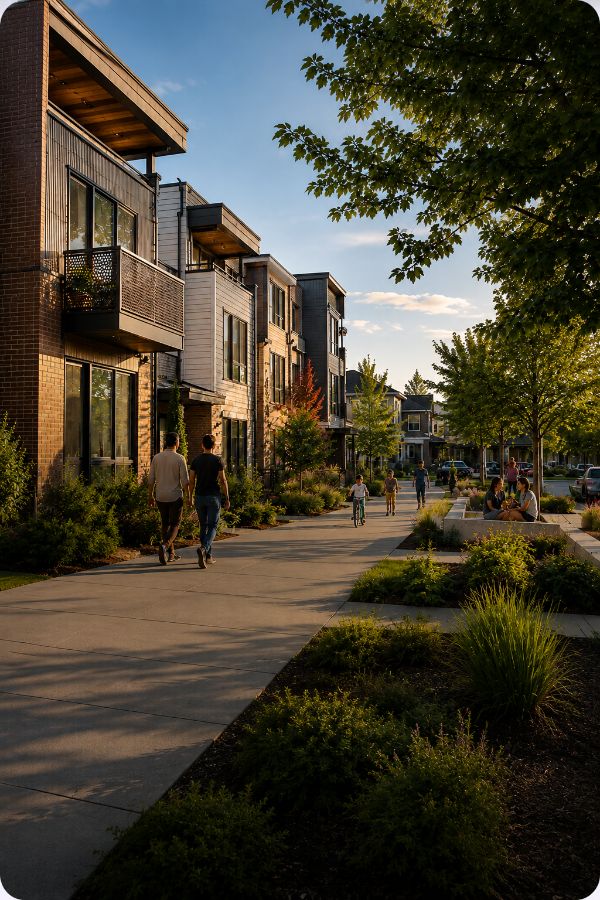
07 Aug Workforce Housing vs. Affordable Housing: What’s the Difference?
Housing terms such as workforce housing, affordable housing, attainable housing, and missing-middle housing are often used interchangeably, but they do not mean exactly the same thing.
Understanding the difference is important for homeowners, investors, landowners, and communities considering new residential development.
At HAUS 121, we believe housing should begin with a simple question:
Who is the housing intended to serve, and what type of development makes sense for the property, community, and market?
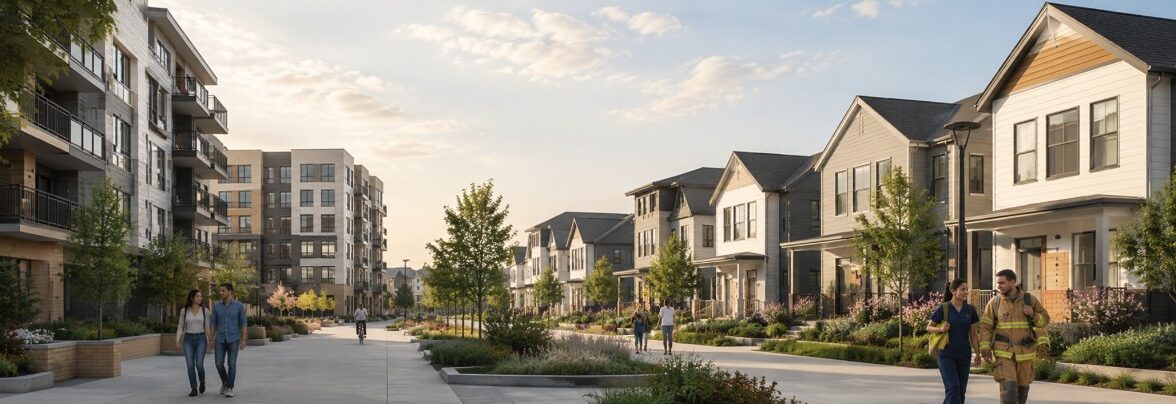
What Is Workforce Housing?
Workforce housing generally refers to housing intended for working and moderate-income households that may earn too much to qualify for certain housing assistance programs but still struggle to afford housing in the communities where they live and work.
Workforce households may include:
- Teachers
- Nurses and healthcare employees
- First responders
- Government employees
- Tradespeople
- Hospitality and service workers
- Administrative professionals
- Early-career professionals
- Working families
There is no single nationwide definition of workforce housing. Income qualifications can vary significantly by location and program.
The goal is generally to provide housing choices that are financially attainable for households earning local wages.
What Is Affordable Housing?
Affordable housing is a broader term.
Housing is generally considered affordable when the household can pay its housing expenses without those costs consuming an excessive portion of its income.
Affordable housing can include:
- Apartments
- Single-family homes
- Townhomes
- Condominiums
- Duplexes
- Stacked flats
- Small multifamily developments
Importantly, affordable housing does not automatically mean public or subsidized housing.
Some affordable housing receives government assistance or is subject to income restrictions. Other homes may simply be priced at levels that local households can reasonably afford.
Workforce Housing vs. Affordable Housing
The easiest way to understand the difference is:
Affordable housing focuses on the relationship between housing costs and household income.
Workforce housing generally focuses on moderate-income working households who may face a gap between their earnings and local housing costs.
Workforce housing can therefore be affordable housing. The two categories can overlap.
What Is Attainable Housing?
Attainable housing is another term commonly used to describe housing that everyday households can realistically rent or purchase.
It may be particularly relevant to:
- First-time homebuyers
- Moderate-income households
- Seniors seeking smaller homes
- Working families
- People who do not qualify for traditional housing assistance
- Households priced out of higher-cost new construction
Like workforce housing, attainable housing does not have one universal definition.
For HAUS 121, attainable housing means creating thoughtful housing choices that consider both how people live and what the market can realistically support.
Is Missing-Middle Housing the Same as Workforce Housing?
No.
This is an important distinction.
Workforce housing describes who the housing may serve.
Missing-middle housing describes the type and scale of housing being built.
Missing-middle housing can include:
- Duplexes
- Triplexes
- Fourplexes
- Townhomes
- Stacked flats
- Cottage-style housing
- Small multifamily buildings
A missing-middle development can provide workforce or attainable housing, but it does not automatically do so.
For example, luxury townhomes may qualify as missing-middle housing based on building form while still being unaffordable to many working households.
Can Workforce Housing Be For Sale?
Yes.
Workforce housing can include both rental and homeownership opportunities.
For-sale housing might include:
- Smaller single-family homes
- Townhomes
- Condominiums
- Stacked flats
- Duplex units
- Smaller infill homes
Creating a range of home sizes and housing types can help provide alternatives to larger and more expensive single-family homes.
Affordability, however, involves more than the purchase price. Buyers also need to consider mortgage costs, taxes, insurance, utilities, maintenance, and association fees where applicable.
What Types of Housing Work Well?
There is no single workforce-housing design.
The right housing type depends on the property, zoning, market, and community.
Townhomes
Townhomes can provide multi-bedroom housing, private entrances, and a homeownership experience similar to traditional detached housing while using land more efficiently.
Stacked Flats
Stacked flats place separate homes above and below one another, which can create more housing on a relatively compact site.
Duplexes and Small Multifamily Housing
Duplexes, triplexes, and fourplexes can increase housing choices while maintaining a neighborhood residential scale.
Smaller Single-Family Homes
Efficiently designed homes with smaller footprints may offer another path toward attainable ownership.
Why Is Workforce Housing Difficult to Develop?
Creating lower-cost housing does not mean development costs disappear.
A project still has to account for:
- Land
- Architecture and engineering
- Permitting
- Utilities
- Site development
- Construction
- Financing
- Insurance
- Taxes
- Carrying costs
This creates one of the biggest challenges in workforce housing:
How do you create housing at a price people can afford while still producing a financially viable development?
The answer often involves thoughtful decisions about land use, density, building size, design, materials, infrastructure, and financing.
How Can Good Design Help?
Attainable housing does not have to mean poor design.
Efficient design can help control costs while creating attractive, functional homes.
Strategies may include:
- Efficient floor plans
- Repeating building types
- Smaller but highly functional homes
- Simplified structural systems
- Durable materials
- Efficient plumbing layouts
- Reduced unused circulation space
- Shared infrastructure
- Practical parking solutions
The goal is not simply to make housing cheaper.
It is to spend development dollars where they create the greatest value for residents.
Why Does Workforce Housing Matter?
Communities depend on people who work in schools, hospitals, public safety, government, construction, hospitality, transportation, retail, and local businesses.
When those workers cannot reasonably afford housing near their jobs, communities may experience:
- Longer commutes
- Higher transportation costs
- Employee recruitment challenges
- Employee retention problems
- Increased traffic
- Fewer local housing choices
A healthy housing market needs options at different price points.
Workforce and attainable housing can help fill the space between deeply subsidized housing and higher-cost market-rate development.
Why Should Investors Consider Workforce Housing?
Workforce housing can also represent a legitimate market opportunity.
Demand may exist from households seeking well-designed housing without luxury pricing.
Investors should still evaluate:
- Local incomes
- Housing demand
- Land cost
- Zoning and permitted density
- Construction cost
- Expected rents or sales prices
- Financing
- Operating expenses
- Long-term value
Housing need alone does not make a project financially viable.
The site, market, design, costs, and financing all need to work together.
How HAUS 121 Approaches Workforce & Attainable Housing
At HAUS 121, our approach begins with understanding the property and the people the development could serve.
01 — Understand the Need
Identify the housing choices that may be missing in the market.
02 — Evaluate the Property
Review zoning, density, utilities, site conditions, access, and neighborhood context.
03 — Identify the Housing Type
Determine whether townhomes, stacked flats, duplexes, small multifamily housing, or another format makes sense.
04 — Test Feasibility
Evaluate land, design, construction, financing, anticipated pricing, and market demand together.
05 — Develop With Purpose
Move viable opportunities through design, approvals, permitting, financing, and construction.
Creating More Housing Choice
Workforce housing is not about creating one type of home for one type of person.
It is about expanding housing choices.
Thoughtful development can create opportunities for working families, first-time buyers, seniors, veterans, professionals, and everyday households who want quality housing at a price that better aligns with their financial reality.
At HAUS 121, we believe successful housing should balance:
Thoughtful Planning. Efficient Design. Quality Construction. Lasting Value.
Exploring a Workforce Housing Opportunity?
HAUS 121 works with property owners, investors, landowners, and development partners to explore workforce housing, attainable housing, missing-middle development, infill projects, and residential redevelopment opportunities.

No Comments