
07 Aug What Landowners Should Know?
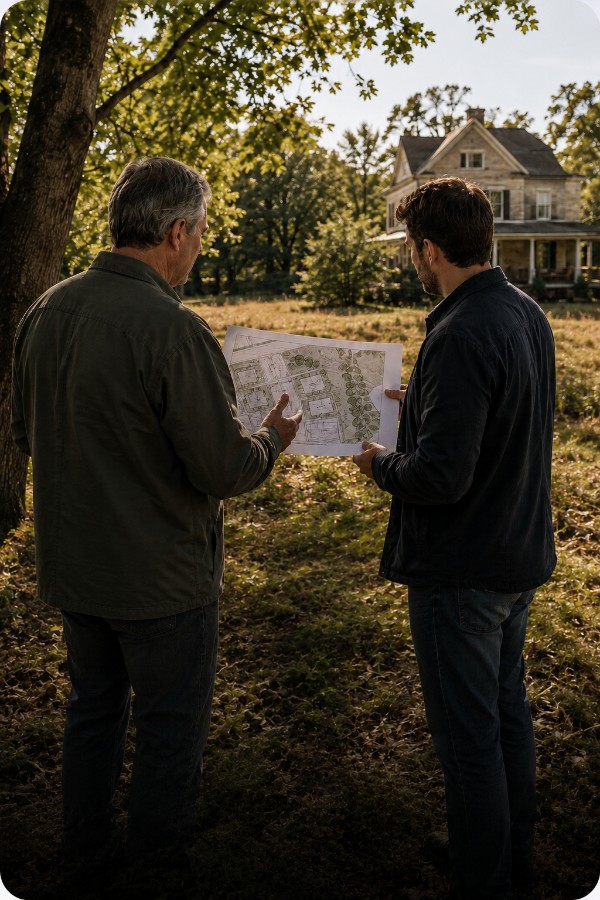
Owning land can create opportunities that are not always obvious from looking at the property today.
A vacant lot, oversized residential parcel, aging home, or underutilized property may have potential for infill housing, redevelopment, additional dwelling units, townhomes, missing-middle housing, or another residential use.
Before selling, landowners should understand one important question:
What is the property actually capable of becoming?
Understanding that potential can help you make a more informed decision about whether to sell, hold, improve, redevelop, or explore a development partnership.
Start With the Property’s Potential—not Its Current Use
What exists on a property today does not necessarily determine its highest or most appropriate future use.
For example, a property currently containing one older home could potentially have characteristics that support:
- A replacement single-family home
- Multiple residential units
- A duplex or small multifamily property
- Townhomes or stacked flats
- An accessory dwelling unit
- Subdivision into additional lots
- Redevelopment with a different residential configuration
What is actually possible depends on the property, zoning, infrastructure, market, and local regulations.
That is why understanding development potential before establishing a sale price or accepting an offer can be valuable.
Understand the Zoning
Zoning is one of the first places to start.
Local zoning regulations can influence:
- Permitted uses
- Number of dwelling units
- Minimum lot size
- Building height
- Setbacks
- Lot coverage
- Parking requirements
- Density
- Accessory dwelling units
- Subdivision possibilities
A large property does not automatically mean multiple homes can be built on it.
Likewise, a smaller urban property may allow more residential development than a landowner realizes.
The key is understanding what the property may legally support before deciding what it is worth or what to do with it.
Look at the Physical Site
Zoning is only one part of the equation.
A property also needs to physically support the proposed development.
Important considerations may include:
- Lot width and depth
- Property boundaries
- Street frontage
- Topography
- Drainage
- Flood conditions
- Soil
- Trees
- Easements
- Existing structures
- Utility locations
- Vehicle access
Two properties with the same acreage can have very different development potential because of their shape, access, terrain, or infrastructure.
Confirm Utility and Infrastructure Availability
Residential development generally requires access to essential infrastructure.
Questions may include:
Is public water available?
Is public sewer available?
Where are the utility connections located?
Does the site have adequate road access?
Will utility extensions or upgrades be required?
Infrastructure can significantly influence development cost.
A property with favorable zoning but expensive utility or site requirements may have a different development value than a similar property where infrastructure is already accessible.
Understand What the Market Supports
Just because something can be built does not necessarily mean it should be built.
The surrounding market matters.
Landowners should consider:
- What types of homes are selling nearby?
- Are new homes being constructed?
- Is the area primarily rental or ownership housing?
- Is there demand for townhomes or smaller homes?
- What prices or rents can the market support?
- Is the neighborhood growing or experiencing reinvestment?
- Are there employment, transportation, retail, or community amenities nearby?
A successful development concept should respond to both the site and the people likely to live there.
Does Development Potential Increase the Property’s Value?
It can—but development potential and actual market value are not the same thing.
A developer generally needs to consider the cost of:
- Purchasing the property
- Architecture and engineering
- Surveys and due diligence
- Permitting and approvals
- Site development
- Utilities
- Construction
- Financing
- Taxes and insurance
- Sales or leasing
- Contingency
Those costs affect what a developer can realistically pay for the land.
For landowners, this is important because a proposed future development may have a substantial completed value while the land itself represents only one component of the overall investment.
Understanding this distinction can help create more realistic expectations when evaluating offers.
Your Options May Go Beyond Selling
A traditional sale is only one possible path.
Depending on your goals and the property, you may want to explore several alternatives.
Sell the Property
A straightforward sale may make sense when you want liquidity, certainty, and a defined exit from the property.
Hold the Property
If the surrounding area is developing or changing, holding the property may be worth evaluating against the costs and risks of continued ownership.
Improve or Redevelop the Property
Some landowners may choose to improve the site themselves or work with professionals to develop it.
Explore a Development Partnership
A landowner and developer may sometimes explore a structure in which each party contributes different resources to a potential project.
The landowner brings the property.
The development team may bring expertise in areas such as feasibility, design, approvals, financing, construction, or project execution.
Any partnership should be carefully structured with appropriate legal, financial, tax, and development professionals.
Consider a Joint Venture
For the right property and ownership goals, a joint venture may provide another alternative to an immediate sale.
Rather than simply transferring the land, the owner may participate in a development opportunity under an agreed structure.
Joint ventures can also involve significant risk and complexity, so the economics, responsibilities, decision-making, timing, and exit strategy should be clearly understood before proceeding.
Questions Landowners Should Ask Before Accepting an Offer
Before making a decision, consider asking:
What is my property zoned for?
Could the property support more housing than it does today?
Can it be subdivided?
Are water and sewer available?
Are there easements or site restrictions?
What is being developed nearby?
Why is the buyer interested in this particular property?
Is the buyer planning to hold, renovate, or redevelop it?
Does the offer include a lengthy due-diligence or approval period?
Are there contingencies that allow the buyer to terminate?
Would selling now or participating in a development opportunity better support my goals?
The highest offer on paper is not always the strongest transaction.
Price, certainty, timing, contingencies, financing, due diligence, and closing terms should all be considered.
What Information Should You Gather?
Before speaking with a developer or evaluating the property’s potential, it can be helpful to gather:
- Property address
- Tax parcel number
- Existing survey, if available
- Deed or title information
- Current zoning
- Lot size
- Existing utility information
- Existing plans or studies
- Information about easements
- Photos of the property
- Any previous development or zoning correspondence
You do not need to have every answer before beginning a conversation.
The objective is to understand the property well enough to identify the questions that need further investigation.
Know the Opportunity Before You Make the Decision
A landowner does not need to become a developer to understand the potential value of a property.
But before selling valuable land, it can be worthwhile to understand:
What can potentially be built?
What are the property’s constraints?
What is happening in the surrounding market?
What development options may exist?
And which path best aligns with your financial and long-term goals?
The right decision may ultimately be to sell.
It may also be to hold, redevelop, or partner.
The important thing is to make that decision with a clearer understanding of the opportunity.
Have Land or Property With Development Potential?
HAUS 121 works with landowners, property owners, investors, and development partners to explore residential development opportunities.
We are interested in properties that may support:
- Infill housing
- Ground-up residential development
- Townhomes
- Missing-middle housing
- Workforce and attainable housing
- Small multifamily development
- Property redevelopment
- Landowner and investor partnerships

No Comments